The best food for an old dog is built around lean, digestible protein, omega-3 fatty acids, antioxidants, and joint support — with controlled phosphorus and calories to ease aging kidneys and maintain a healthy weight. The right choice depends on your dog’s size, weight, and any health conditions, so use this guide to compare strong options, then confirm the pick with your veterinarian.
Senior nutrition is not one-size-fits-all. A small 12-year-old has very different needs from an aging large breed or an overweight senior, and conditions like kidney disease, arthritis, or pancreatitis change the math entirely. The picks below are mainstream, widely available senior formulas — a sensible starting point, not medical advice.
Disclosure: As an Amazon Associate, I may earn from qualifying purchases.
Quick Answer: What Makes a Good Senior Dog Food?
Veterinary sources consistently point to the same priorities for older dogs: a lean, named protein (chicken, turkey, or fish), omega-3 and omega-6 fatty acids for joints and coat, antioxidants for the immune system, reduced phosphorus to ease the kidneys, and joint support such as glucosamine and chondroitin. Calories usually need to come down as activity drops, and the food should be easy to chew and digest.
On This Page
- What to look for in senior dog food
- Best senior dog foods compared
- The picks reviewed
- Choosing by size and need
- Weight, kidneys, and pancreatitis
- Switching foods safely
- When to involve your vet
- Frequently asked questions
What to Look For in Senior Dog Food
- Lean, named protein: Chicken, turkey, or fish as a first ingredient helps maintain muscle as dogs age. Adequate protein matters more for seniors than older “low-protein” advice once suggested.
- Omega-3 and omega-6 fatty acids: Found in fish oil and flaxseed, these support joints, skin, and coat.
- Antioxidants: Vitamins E and C and other antioxidants support an aging immune system.
- Reduced phosphorus: Slightly lower phosphorus reduces the workload on aging kidneys.
- Joint support: Glucosamine and chondroitin are common additions for stiff, older joints.
- Controlled calories: Less active seniors gain weight easily, so calorie density should match their activity.
- Easy to chew and digest: Smaller kibble, softer textures, or added fiber and probiotics help dogs with dental wear or sensitive digestion.
Best Senior Dog Foods Compared
| Product | Best For | Standout |
|---|---|---|
| Purina Pro Plan Senior Shredded Blend | Overall everyday pick | Real chicken + live probiotics |
| Hill’s Science Diet Adult 7+ | Mainstream, easy to chew | Small kibble, chicken/brown rice/barley |
| Royal Canin Large Adult 5+ | Large-breed seniors | Joint support for big dogs |
| Royal Canin Small Adult 8+ | Small-breed seniors | Tiny kibble for small mouths |
| Wellness CORE Digestive Health Senior | Sensitive stomachs | Digestion-focused, real chicken |
| IAMS Proactive Health Senior | Budget-friendly | Real chicken at a lower price |
| Purina ONE Vibrant Maturity 7+ | Higher-protein, active seniors | High protein for muscle maintenance |
The Picks Reviewed
Purina Pro Plan Senior Shredded Blend Chicken & Rice — Best Overall Everyday Pick
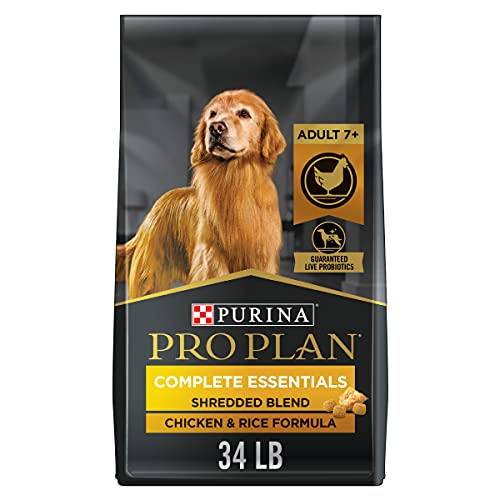
Real chicken as the first ingredient, a shredded-blend texture many dogs find palatable, and added live probiotics for digestion make this a strong, widely recommended everyday choice for seniors. It’s one of the most popular senior formulas on the market, which also makes it easy to find and restock.
- Pros: Real-chicken protein, live probiotics, appealing texture, easy to find.
- Cons: Contains grains, so not for dogs with a specific grain sensitivity.
Hill’s Science Diet Adult 7+ — Mainstream and Easy to Chew

A chicken, brown rice, and barley recipe in a small kibble that’s easy for older mouths to chew, from a brand vets frequently mention. A dependable, balanced option for the average senior without special dietary needs.
- Pros: Small kibble, balanced nutrition, vet-familiar brand, antioxidants for immune support.
- Cons: Premium price; single main protein may not suit chicken-sensitive dogs.
Royal Canin Large Adult 5+ — Best for Large-Breed Seniors

Large breeds age faster and feel joint wear sooner, so they benefit from a formula built for their size. This one includes glucosamine and chondroitin for joint support and a kibble and nutrient profile tuned for bigger dogs entering their senior years (5+ for large breeds).
- Pros: Joint support, large-breed-specific, digestible proteins.
- Cons: Higher price; large bag size; breed-size-specific formula.
Royal Canin Small Adult 8+ — Best for Small-Breed Seniors

Small breeds live longer and often become picky or develop dental wear with age. This formula uses a tiny kibble designed for small mouths, with nutrients aimed at older small dogs (8+). For very old tiny dogs, Hill’s also makes a Small & Mini Senior 11+ formula worth comparing.
- Pros: Tiny kibble, high palatability, tailored to small seniors.
- Cons: Premium price; small-breed only; some picky dogs may resist.
Wellness CORE Digestive Health Senior — Best for Sensitive Stomachs

Built around digestion, with real chicken and wholesome grains, this is a good fit for older dogs whose stomachs have become more sensitive with age. Made in the USA and aimed specifically at dogs over 7.
- Pros: Digestion-focused, real chicken, senior-specific.
- Cons: Often sold in smaller bags; contains grains.
IAMS Proactive Health Senior — Best Budget Pick

Real chicken, antioxidants, and joint and immune support at a noticeably lower price per pound than the premium brands. A solid value option for healthy seniors without special dietary needs.
- Pros: Affordable, real chicken, antioxidants, widely available.
- Cons: Less specialized than premium formulas; large bag to store.
Purina ONE Vibrant Maturity 7+ — Best Higher-Protein Option

A higher-protein senior formula aimed at maintaining muscle in active older dogs, with antioxidants and joint support. A good middle ground between premium and budget for seniors that are still energetic.
- Pros: Higher protein for muscle maintenance, antioxidants, reasonable price.
- Cons: Higher protein isn’t right for every senior (e.g. some kidney cases — ask your vet).
Choosing by Size and Need
Small-breed seniors
Small dogs live longer, are prone to dental issues, and need small kibble and calorie-dense food in tiny portions. Look for “small breed” senior formulas like Royal Canin Small Adult 8+ or Hill’s Small & Mini Senior.
Large-breed seniors
Large breeds age sooner and carry more joint stress, so they benefit from large-breed senior formulas with added glucosamine and chondroitin and controlled calories to avoid extra weight on the joints.
Senior dog food without chicken
If your dog reacts to chicken, look for a single alternative protein — salmon, lamb, or a novel protein like duck — ideally in a limited-ingredient senior formula. Most mainstream senior foods are chicken-based, so read labels carefully and introduce any new protein gradually.
Wet vs dry for older dogs
Wet food can help seniors that struggle to chew, have dental pain, or need encouragement to eat and stay hydrated. Dry food is more convenient and better for dental wear. Many owners mix the two — adding a little wet food or warm water to kibble to boost appeal for a fussy older dog.
Weight, Kidneys, and Pancreatitis
Weight management: Less active seniors gain weight easily, and extra pounds worsen joint and heart problems. A senior or “healthy weight” formula with controlled calories, fed in measured portions, helps.
Kidney health: Aging kidneys benefit from moderately reduced phosphorus and high-quality protein. If your dog has diagnosed kidney disease, your vet may recommend a specific therapeutic renal diet rather than an over-the-counter senior food.
Pancreatitis: Dogs prone to pancreatitis usually need a low-fat diet, and severe or recurrent cases often call for a prescription low-fat formula. This is a condition to manage with your veterinarian, not by guessing at an over-the-counter food.
Switching Your Senior to a New Food
Older dogs can have more sensitive digestion, so transition gradually over 7 to 10 days — start with about 25% new food, and increase it every few days as long as your dog tolerates it. If you see vomiting, diarrhea, or refusal, slow down and check with your vet.
When to Involve Your Vet
Food supports healthy aging, but it doesn’t replace veterinary care. Talk to your vet before switching foods if your senior dog has lost or gained weight, is drinking or urinating more, has new stiffness or trouble rising, is vomiting or having diarrhea, or is eating less. These can be early signs of kidney disease, arthritis, dental pain, or other conditions where the right diet is part of a medical plan, not a substitute for one.
Frequently Asked Questions
What is the healthiest food for a senior dog?
The healthiest choice is a complete, balanced senior formula with lean named protein, omega-3 fatty acids, antioxidants, controlled phosphorus and calories, and joint support — matched to your dog’s size and any health conditions. There’s no single “best” for every dog; the right fit depends on the individual, so confirm with your vet.
What dog food do veterinarians recommend for senior dogs?
Vets commonly point to established senior formulas from brands like Purina Pro Plan, Hill’s Science Diet, and Royal Canin, and to therapeutic diets for specific conditions. The recommendation depends on your dog’s health, so it’s best confirmed during a check-up.
What is the best food to give an older dog?
A senior-specific complete diet sized to your dog (small, large, or all breed) with quality protein, joint and digestive support, and controlled calories is the best everyday starting point. Wet food or softened kibble helps dogs with dental wear.
What is the best dog food for pancreatitis?
Dogs prone to pancreatitis generally need a low-fat, highly digestible diet, and recurrent or severe cases often require a prescription low-fat formula. This should be chosen with your veterinarian rather than from an over-the-counter shelf.
Which senior dog food is easiest to digest?
Look for digestion-focused senior formulas with real protein, added probiotics or fiber, and gentle grains — for example, a digestive-health senior food. Introduce it slowly, since even gentle foods can upset an older stomach if switched too fast.
When should a dog switch to senior food?
Most dogs are considered senior around 7, but large breeds age sooner (often 5–6) and small breeds later. Your vet can advise the right time based on your dog’s size, weight, and health.
Final Verdict
For most healthy seniors, a real-chicken formula with probiotics like Purina Pro Plan Senior or a vet-familiar option like Hill’s Science Diet 7+ is a sensible starting point. Match the food to your dog’s size (Royal Canin Large 5+ or Small 8+), choose a digestion-focused formula for sensitive stomachs, and step up to a higher-protein option for active seniors. Above all, fold in your vet’s input — especially for weight, kidney, or pancreatitis concerns — and transition slowly so an aging stomach can keep up.