The best dog nail clippers are sturdy, sharp, plier-style trimmers — the Millers Forge clipper is the gold standard vets and groomers reach for, and the Safari Professional is the best all-round pick for at-home use thanks to its safety stop. For dogs that fear the “chomp,” a quiet grinder like the Dremel PawControl files nails down gradually instead. The right tool depends on your dog’s size, nail thickness, and temperament.
Below are the experts’ top picks plus a range of well-rated clippers and grinders for specific needs — large dogs, thick nails, nervous pets, and beginners — along with the safe-trimming technique that matters as much as the tool.
Disclosure: As an Amazon Associate, I may earn from qualifying purchases. Some links go to Amazon search results for a named product so you can compare current options.
What the Experts Recommend
Across Wirecutter, NYT, and veterinary sources, three tools come up again and again:
- Millers Forge Pet Nail Clipper — the gold standard. Surgical-grade steel that cuts cleanly without crushing the nail; the long-time favorite of vets and groomers. Most models have no safety guard, so it rewards a steady hand.
- Safari Professional Nail Trimmer — best overall for home use. Sharp stainless blades, a non-slip handle, and an adjustable safety stop that helps prevent cutting too short.
- Dremel Pet PawControl 7760 Grinder — best for nervous dogs. A cordless, quiet rotary grinder that files nails gradually — ideal for dogs that hate the snap of clippers.
On This Page
- How to choose
- Clippers & grinders compared
- The picks reviewed
- Clippers vs grinders
- How to trim safely
- FAQ
How to Choose
- Match the size: small dogs need lighter clippers with smaller blades; large dogs with thick nails need a strong plier-style clipper or a grinder.
- Clipper or grinder: clippers are fast; grinders are slower and gentler, and better for nervous dogs or smoothing sharp edges.
- Safety features: a safety stop/guard, a nail file, or an LED light helps beginners avoid over-cutting.
- Sharp blades: dull blades crush or split nails — quality steel cuts cleanly.
- Dark nails: if you can’t see the quick, lean toward a guard, an LED clipper, or a grinder and take small passes.
Clippers & Grinders Compared
| Product | Type | Best For |
|---|---|---|
| Millers Forge | Plier clipper | Overall / vet & groomer choice |
| Safari Professional | Plier clipper | Best everyday (safety stop) |
| Dremel PawControl 7760 | Grinder | Nervous dogs |
| Epica Professional | Plier clipper | Large dogs / thick nails |
| gonicc Dog & Cat | Plier clipper | Beginners (guard + file) |
| Boshel | Plier clipper | Budget all-in-one |
| iToleeve LED | LED clipper | Light-colored nails |
| Grinder & Clipper Kit | Grinder kit | Budget grinder kit |
| Tpotato | Plier clipper | Large breeds (quick sensor) |
The Picks Reviewed
The three experts’ picks above (Millers Forge, Safari, Dremel) are covered in the highlighted box. Below are well-rated options for specific needs, each with a real product listing.
Epica Professional Dog Nail Clipper — Best for Large Dogs & Thick Nails

Best for: large dogs and thicker nails. Strong stainless blades and a safety guard make it a sturdy, confident clipper — one of the most widely sold heavy-duty options.
- Pros: Good for large dogs; safety guard; sharp, clean cuts.
- Cons: Too big for toy breeds; thick nails still need careful positioning.
gonicc Dog & Cat Nail Clippers — Best for Beginners
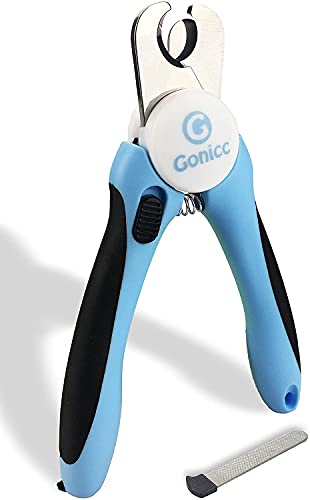
Best for: nervous beginners. A popular, well-reviewed clipper with a safety guard to limit over-cutting and a built-in file to smooth edges afterward.
- Pros: Safety guard; included file; works for dogs and cats.
- Cons: Light for those who prefer a heavier tool; not for very thick nails.
Boshel Dog Nail Clippers — Best Budget All-in-One

Best for: a simple, affordable everyday clipper. Non-slip handles, sharp blades, a safety guard, and a hidden nail file — a long-time bestseller for routine trims.
- Pros: Affordable; safety guard; non-slip grip; file included.
- Cons: Too large for very small dogs; blades need care to stay sharp.
iToleeve LED Nail Clipper — Best for Light-Colored Nails

Best for: owners nervous about the quick on light nails. A built-in light illuminates the nail so you can see where to stop. Less useful on very dark nails, where the light can’t reveal the quick.
- Pros: LED improves visibility; sharp blades; reassuring for beginners.
- Cons: Limited help on dark nails; battery to maintain.
Grinder & Clipper Kit — Best Budget Grinder Kit

Best for: trying a grinder without the Dremel price. A quiet, rechargeable grinder paired with clippers and multiple speeds — a gentle way to introduce gradual filing to a wary dog.
- Pros: Quiet; rechargeable; multiple speeds; clippers included.
- Cons: Grinding is slower; some dogs dislike vibration; wheels wear down.
Tpotato Dog Nail Clippers — Best Quick-Sensor Clipper for Large Breeds
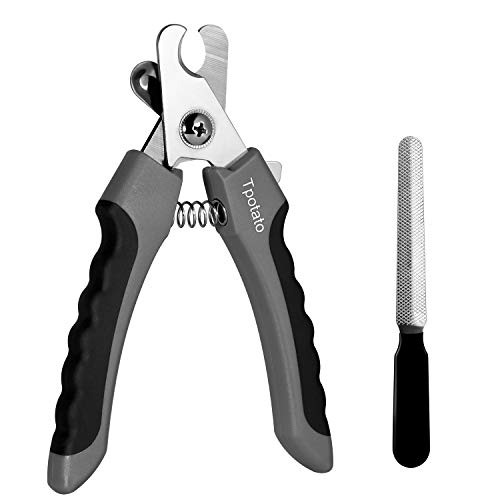
Best for: large-breed owners who want a quick-sensor guide. A heavier clipper with a quick sensor, guard, and file aimed at bigger dogs and thicker nails. A quick sensor is a helpful guide, not a guarantee — still trim small.
- Pros: Quick-sensor guide; guard and file; strong for thick nails.
- Cons: Too large for small breeds; takes practice.
Clippers vs Grinders: Which Is Better?
Neither is universally better — it depends on your dog and your confidence. Clippers cut the nail in one quick motion; grinders file it down gradually. Many owners use both: clip the bulk, then grind to smooth the edge.
| Tool | Best for | Main drawback |
|---|---|---|
| Clippers | Fast trims, thick nails, confident owners | Higher risk of over-cutting if rushed |
| Grinders | Nervous dogs, smoothing edges, gradual trimming | Slower; vibration and noise |
| LED clippers | Light-colored nails, visibility | Little help on dark nails |
How to Trim Your Dog’s Nails Safely
- Find the quick: the quick is the pink blood vessel inside the nail. On light nails it’s easy to see — stop well before it. On dark nails you can’t see it, so trim thin slivers until you see a small black or grey dot in the center of the cut surface, then stop.
- Keep styptic powder handy: if you nick the quick, styptic powder (or a styptic pencil) stops the bleeding quickly. Keep it within reach before you start.
- Trim small, trim often: small amounts every couple of weeks are safer than rare big cuts, and regular trimming makes the quick recede over time.
- Build positive associations: reward with high-value treats during and after, and stop if your dog gets very stressed rather than forcing it.
- Know when to get help: for curled, cracked, or painful nails, or a dog that won’t tolerate trimming, ask a groomer or vet.
Frequently Asked Questions
What nail clippers do vets recommend for dogs?
Vets and groomers most often recommend a sturdy plier-style clipper, with the Millers Forge clipper frequently named the gold standard. The Safari Professional is another widely recommended choice thanks to its safety stop.
What do professional groomers use to trim dog nails?
Many groomers use Millers Forge clippers for cutting and a rotary grinder (like a Dremel) to smooth and shorten, switching between the two depending on the dog’s size, nail thickness, and temperament.
Is it better to grind or cut dog nails?
Cutting is faster and better for thick nails; grinding is more gradual and often less stressful for nervous dogs, and smooths sharp edges. Using both — clip then grind — gives the best finish for many dogs.
How do I avoid cutting the quick?
Trim small amounts at a time and stop before the sensitive inner part. On dark nails, watch for a black or grey dot appearing in the center of the cut. A safety guard, LED light, or grinder helps, but careful technique matters most — and keep styptic powder nearby.
How often should I trim my dog’s nails?
Every few weeks for most dogs, but it depends on growth rate and how much your dog walks on hard surfaces. A good rule: if you hear nails clicking on the floor or see them touching the ground when standing, it’s time.
Can I use the same clippers for cats and dogs?
Some clippers are made for both, but size matters — a clipper sized for a medium dog is usually too large for a cat or toy breed. Match the tool to the animal’s nail size.
Final Verdict
For most dogs, a Millers Forge or Safari Professional plier clipper is the best buy — sharp, durable, and trusted by the people who trim nails for a living. Reach for a grinder like the Dremel PawControl (or a budget kit) if your dog fears clippers, the Epica or Tpotato for big dogs and thick nails, and an LED or safety-guard clipper if you’re nervous about the quick. Whatever you choose, trim small amounts, keep styptic powder close, reward generously, and stop if your dog gets stressed.